Effective July 1, 2024, most California employers will be required to adhere to a comprehensive set of workplace violence prevention regulations.
The standard mandates that covered employers develop a comprehensive, accessible and written Workplace Violence Prevention Plan (WVPP), ensuring that employees and supervisors receive training on workplace violence issues. Furthermore, it necessitates the creation and maintenance of a detailed violence incidence log, alongside record-keeping of all training sessions and workplace incidents that involve violence.
Exceptions exist for California employers that are already required to comply with California’s existing workplace violence prevention standard for healthcare, as well as employees teleworking from a location of their choosing that is not controlled by the employer. These exceptions also apply to places of employment that are not accessible to the public and where there are fewer than 10 employees working at any given time.
Requirements include:
Designate individuals responsible for the plan.
Involve employees and authorized representative in plan development.
Coordinate the plan with other employers when necessary.
Review and revise the plan with employee involvement as needed.
Identify and address workplace violence hazards through inspections.
Provide initial and annual training.
Maintain records of hazard identification, evaluation and correction.
The information provided here is intended for informational purposes only and should not be construed as legal advice. While every effort has been made to ensure the accuracy of the information, it is not guaranteed to be correct, complete or up to date. Legal matters often have specific individual circumstances that affect the appropriate course of action. As such, we strongly recommend consulting with a qualified legal professional for any legal advice pertaining to your situation.
At the end of 2023, the New York City Department of Consumer and Worker Protection (DCWP) was directed by the City Council to establish a new employer requirement to inform employees in the city of their work-related rights under local, state, and federal law. The City Council’s ordinance directed DCWP to publish a comprehensive guide to workers’ rights and to develop a document for employers to notify employees of the existence of this guide. The new “Workers’ Bill of Rights” and “Your Rights at Work” posters were released on March 1.
Post the notice poster released by DCWP in a location visible to employees; businesses that operate online and cannot physically post the notice must post online where employees can see
Post the notice poster to an intranet or mobile app if either is used to communicate to employees on a regular basis
Provide a copy of the notice poster to every existing employee
Provide a copy of the notice poster to every new employee on or before their first day of work
Ensure that the notice is translated into any language spoken as a primary language by at least five percent of employees
Penalties for noncompliance will be $500 after the initial violation, and violations must be corrected within 30 days of receiving notice by DCWP.
A copy of the poster and additional information about the Workers’ Bill of Rights may be found here.
The information provided in this document does not, and is not intended to, constitute legal advice. Instead, all information, content and materials available here are for general informational purposes only. If you require legal advice, we strongly recommend that you consult with a qualified attorney. Only your individual attorney can provide personalized advice tailored to your specific situation and jurisdiction. This document should not be relied upon as a substitute for professional legal counsel.
Included in the 2025 New York state budget is a provision that requires all New York employers, regardless of size, to provide a paid 30-minute break for employees to express breast milk at work up to three years after childbirth. The employee may also use existing paid or unpaid break or mealtime for breast milk expression in excess of 30 minutes. The law does not explicitly cap the number of paid 30-minute lactation breaks per workday. Employers are required to provide lactation breaks when the employee has a reasonable need to express breast milk. The new requirement is effective June 19, 2024.
Prior to this new requirement, New York employers were only required to provide reasonable unpaid lactation breaks. It is recommended that employers change their lactation accommodation policies to reflect the new paid break requirement. The model policy developed by the New York Department of Labor has not yet been updated to reflect this change.
For additional information and updates from the State of New York regarding lactation in the workplace, please visit https://dol.ny.gov/breast-milk-expression-workplace. You can also obtain updates on such requirements through the HR Resource Center here.
The information provided in this document does not, and is not intended to, constitute legal advice. Instead, all information, content and materials available here are for general informational purposes only. If you require legal advice, we strongly recommend that you consult with a qualified attorney. Only your individual attorney can provide personalized advice tailored to your specific situation and jurisdiction. This document should not be relied upon as a substitute for professional legal counsel.
Recent ruling: Changes to salary thresholds for exempt employees
Get ready for some game-changing news! We’re diving into the latest updates to the white-collar exemption under the Fair Labor Standards Act (FLSA).
What’s new?
Increased minimum salary
Effective July 1, 2024, the minimum salary level for executive, administrative or professional employees to be classified as exempt has risen from $684 per week ($35,568 per year) to $844 per week ($43,888 per year).
On Jan. 1, 2025, this minimum salary will increase to $1,128 per week ($58,656 per year).
Highly compensated employee (HCE) exemption
The annual compensation threshold for the highly compensated employee exemption has also been adjusted.
Starting July 1, 2024, the threshold is $132,964, which will increase to $151,164 on Jan. 1, 2025.
HCE exemption applies to employees earning above this threshold.
Automatic updates
Going forward, the salary thresholds will be automatically updated every three years.
Starting July 1, 2027, and every triennial cycle thereafter, the thresholds will adjust based on changes in worker salaries.
What clients need to know
Review employee salaries
Clients should review their employees’ salaries to ensure compliance with the new thresholds.
If an employee’s salary falls below the minimum, consider reclassifying them as non-exempt and paying overtime as required.
Evaluate job duties
Remember that salary alone does not determine exempt status.
Employees must also meet the “duties” tests specific to their job category (executive, administrative, professional or computer employee).
Stay informed
Keep an eye on future updates. The automatic triennial adjustments will provide predictability for planning.
The recent changes to the white-collar exemption aim to strike a balance between fair compensation and workforce management. As a client, understanding these updates is essential to avoid legal pitfalls and ensure compliance.
The information provided in this document does not, and is not intended to, constitute legal advice. Instead, all information, content and materials available here are for general informational purposes only. If you require legal advice, we strongly recommend that you consult with a qualified attorney. Only your individual attorney can provide personalized advice tailored to your specific situation and jurisdiction. This document should not be relied upon as a substitute for professional legal counsel.
The FLSA overtime rule decides whether employees qualify or do not qualify for overtime pay. Employees who are exempt do not get overtime pay for hours worked over 40 in a workweek because of their type of work and how much they are paid. Employees who are nonexempt must be paid one-and-a-half times their regular rate for any hours worked above 40 in a workweek.
On April 23, 2024, the Department of Labor issued a final rule that raised the salary-level threshold for white-collar exemptions from $684 a week to $844 a week, starting from July 1, 2024, and then to $1,128 a week, starting from Jan. 1, 2025. The final rule is expected to give overtime protections to about 4 million workers who are not currently covered under federal law.
An employee’s salary level alone does not determine their exemption from overtime pay; their main job responsibilities must also fall under the executive, administrative or professional categories outlined by the rules.
Under the April 2024 final rule:
The overtime rule increases the standard salary threshold levels in two stages. Workers who make less than $43,888 annually ($844 a week) by July 1, 2024, would qualify for overtime pay, regardless of their manager or professional status. The salary-level threshold goes up to $58,656 a year ($1,128 a week) by Jan. 1, 2025. The salary threshold adjusts automatically every three years.
Up to 10% of the standard salary level can be met by nondiscretionary bonuses and incentive payments (including commissions) that are paid yearly or more often.
To qualify as highly compensated employees under the special rule, workers would need to make a total annual pay of at least $151,164 (with a minimum of $1,128 paid every week on a salary or fee basis).
The final rule is effective in phases, with one effective date of July 1, 2024, and a second effective Jan. 1, 2025.
The information provided here is intended for informational purposes only and should not be construed as legal advice. While every effort has been made to ensure the accuracy of the information, it is not guaranteed to be correct, complete or up to date. Legal matters often have specific individual circumstances that affect the appropriate course of action. As such, we strongly recommend consulting with a qualified legal professional for any legal advice pertaining to your situation.
The Pregnant Workers Fairness Act (PWFA) is a U.S. law designed to eliminate discrimination and ensure workplace accommodations for workers with known limitations related to pregnancy, childbirth or related medical conditions. Here are some key points about the PWFA:
The PWFA requires a covered employer to provide a “reasonable accommodation” to a qualified employee’s or applicant’s known limitations related to, affected by, or arising out of pregnancy, childbirth or related medical conditions unless the accommodation causes the employer an “undue hardship.”
This act applies only to accommodations. Other laws that the Equal Employment Opportunity Commission (EEOC) enforces make it illegal to fire or otherwise discriminate against employees or applicants based on pregnancy, childbirth or related medical conditions.
The PWFA does not replace federal, state or local laws that are more protective of workers (used here to mean job applicants and employees) affected by pregnancy, childbirth or related medical conditions.
This act applies to private and public sector employers (state and local governments) with 15 or more employees. It also applies to Congress and federal agencies, as well as to employment agencies and labor organizations.
The PWFA went into effect on June 27, 2023. On April 15, 2024, the EEOC issued its final regulation to carry out the law. The regulation goes into effect on June 18, 2024. You can find a summary of the regulation here.
On April 25, 2024, 17 states jointly filed suit in federal court to halt implementation of the rule. Litigation is ongoing, and the status of the rule is uncertain, pending its outcome.
The information provided here is intended for informational purposes only and should not be construed as legal advice. While every effort has been made to ensure the accuracy of the information, it is not guaranteed to be correct, complete or up to date. Legal matters often have specific individual circumstances that affect the appropriate course of action. As such, we strongly recommend consulting with a qualified legal professional for any legal advice pertaining to your situation.
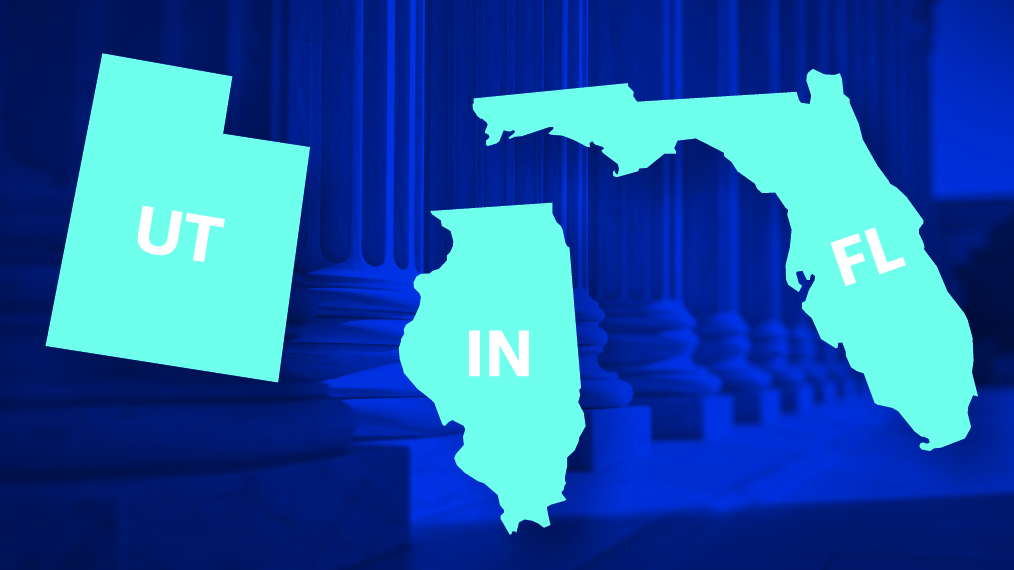
Effective May 1, 2024, Utah has amended its child labor laws for minors under 16 years of age.
Under the amendment, minors under 16 years of age are not permitted to work:
More than three hours in one school day
More than 18 hours in one school week
More than eight hours in one calendar day
More than 40 hours in one calendar week
Before 7 a.m. or after 7 p.m.
Minors under 16 years old may work until 9 p.m. beginning on June 1 and ending on Labor Day.
Florida
Effective July 1, 2024, Florida has amended its child labor laws for some minors.
Under the amendment, minors 16 and 17 years of age are permitted to work:
More than 30 hours per week during the school year with a signed consent form from a parent, custodian or superintendent
More than eight hours a day on holidays and Sundays during the school year
Before 6:30 a.m. and after 11 p.m. when there’s no school the following day
Seven days a week but restricted to eight-hour days
Minors 16 and 17 years of age must receive a 30-minute meal period for every four hours of work if they work eight or more hours.
Minors under 15 years of age can work longer than 15 hours a week (up to 40) when school isn’t in session.
Indiana
Effective Jan. 1, 2025, Indiana has amended its child labor law requirements for some minors.
14- and 15-year-olds can work until 9 p.m. on days preceding school between June 1 and Labor Day.
Previous restrictions regarding time and hour restrictions for minors 16 years and older have been removed.
Remember to make HR personnel and supervisors aware of these amendments. In the event of a conflict between federal and state child labor laws, employers should adhere to the law that offers the greatest level of protection for minors.
The information provided here is intended for informational purposes only and should not be construed as legal advice. While every effort has been made to ensure the accuracy of the information, it is not guaranteed to be correct, complete or up to date. Legal matters often have specific individual circumstances that affect the appropriate course of action. As such, we strongly recommend consulting with a qualified legal professional for any legal advice pertaining to your situation.
UPDATE 07/01/ 2024: The previous effective date of July 1, 2024 for an increase in the California health worker minimum wage is void. Per the terms of an agreement between state legislators and the governor, the state’s health worker minimum wage will be delayed until at least October 15, 2024. The increase will only take effect if state revenue between July and September is at least 3% higher than expected under existing projections. If state revenue does not rise to this threshold level, the effective date of the minimum wage increase will be pushed back further to January 1, 2025
UPDATE: On Friday, May 31, the California Governor signed into law a one-month delay in the effective date of the healthcare minimum wage increase originally meant to take effect June 1. The new effective date of the increase will be July 1, 2024, and any June 1 dates for incremental minimum wage increases in the law will be changed to July 1. This bill is effective immediately.
An increase to the statutory minimum wage for health care workers in California will go into effect June 1, 2024. Simultaneously the definition of “health-care” positions subject to the increase will be greatly expanded. The intended goal of the changes is to help solve the shortage of health-care workers in the state, but the law does increase the financial burden on employers in the field.
What employers are subject to the increase?
A facility or other work site that is part of an integrated health-care delivery system
Licensed general acute-care hospitals
Licensed acute psychiatric hospitals
Special hospitals
Licensed skilled nursing facilities, if owned, operated or controlled by a hospital or integrated health-care delivery system or health-care system
Patients’ homes when health-care services are delivered by an entity owned or operated by a general acute-care hospital or acute psychiatric hospital
Licensed home health agencies
Clinics, including specialty-care clinics, dialysis clinics, psychology clinics, outpatient clinics, clinics operated or affiliated with any institution teaching a recognized healing art, and/or nonprofit clinics that conduct medical research and health education and provide health care to its patients through a group of 40 or more physicians and surgeons, who are independent contractors representing not less than 10 board-certified specialties, and not less than two-thirds of whom practice on a full-time basis at the clinic
Licensed residential-care facilities for the elderly, if affiliated with an acute-care provider or owned, operated or controlled by a general acute-care hospital, acute psychiatric hospital or the parent entity of a general acute-care hospital or acute psychiatric hospital
Psychiatric health facilities
Mental-health rehabilitation centers
Community clinics, intermittent clinics or publicly operated clinics
Rural health clinics
Urgent care clinics
Ambulatory surgical centers
Physician groups
County correctional facilities that provide health-care services
County mental-health facilities
What employees are subject to the increase?
An employee of a health-care facility employer who provides patient care, health-care services, or services supporting the provision of health care, which includes, but is not limited to, employees performing work in the occupation of a nurse, physician, caregiver, medical resident, intern or fellow, patient-care technician, janitor, housekeeping staff person, groundskeeper, guard, clerical worker, nonmanagerial administrative worker, food service worker, gift shop worker, technical and ancillary services worker, medical coding and medical billing personnel, scheduler, call center and warehouse worker, and laundry worker, regardless of formal job title.
It could also include a contracted or subcontracted employee when:
The employee’s employer contracts with the health-care facility employer, or with a contractor or subcontractor to the health-care facility employer, to provide health-care services or services supporting the provision of health care, and
The health-care facility employer, directly or indirectly, or through an agent or any other person, exercises control over the employee’s wages, hours or working conditions. However, “covered health-care employee” includes all employees performing contracted or subcontracted work primarily on the premises of a health-care facility to provide health-care services or services supporting the provision of health care.
How does the law change nonexempt status?
The law also increases the salary threshold for health-care workers to be deemed exempt from minimum wage and overtime requirements. Health-care workers must now earn a monthly salary of no less than 150% of the health-care worker minimum wage or 200% of the state minimum wage for all workers, whichever is greater, in order to be considered exempt.
When does the law take effect, and for whom?
Increases to both the minimum wage and the exempt salary base are done incrementally according to the size of the health-care employer.
The following are the four tiers of employers subject to different timing requirements:
Large employers and integrated health systems
Defined as covered health-care facilities that: (1) have 10,000 or more full-time equivalent employees; (2) are part of an integrated health-care delivery system or health-care system with 10,000 or more full-time equivalent employees; (3) dialysis clinics; (4) or facilities owned, affiliated or operated by a county with a population of more than 5,000,000 as of Jan. 1, 2023
Step-up period
Hourly minimum
June 1,2024 to May 31, 2025
$23/hr
June 1, 2025 to May 31, 2026
$24/hr
June 1, 2026 and after
$25/hr
Hospitals
Defined as any hospital that (1) has a high governmental payor mix; (2) is an independent hospital with an elevated governmental payor mix; (3) is a rural independent covered health-care facility; or (4) is a covered health-care facility that is owned, affiliated or operated by a county with a population of less than 250,000 as of Jan. 1, 2023
Step-up period
Hourly minimum
June 1, 2024 to May 31, 2033
$18/hr with 3.5% increases annually
June 1, 2033 and after
$25/hr
Clinics
Defined as clinics, including: (1) primary care clinics, (2) non-governmental free clinics; (3) community clinics and any associated intermittent clinic; (4) rural clinics; and (5) urgent- care clinics owned and/or affiliated with community or rural- care clinics
Step-up period
Hourly minimum
June 1, 2024 to May 31, 2026
$21/hr
June 1, 2026 to May 31, 2027
$22/hr
June 1, 2027 and after
$25/hr
All other health-care facilities
Defined as any covered health-care facility not listed above
Step-up period
Hourly minimum
June 1, 2024 to May 31, 2026
$21/hr
June 1, 2026 to May 31, 2028
$23/hr
June 1, 2028 and after
$25/hr
The information provided in this document does not, and is not intended to, constitute legal advice. Instead, all information, content and materials available here are for general informational purposes only. If you require legal advice, we strongly recommend that you consult with a qualified attorney. Only your individual attorney can provide personalized advice tailored to your specific situation and jurisdiction. This document should not be relied upon as a substitute for professional legal counsel.
In February, the California Civil Rights Department updated its guidance for employers subject to the state’s pay data reporting requirements. The process is largely the same with a few notable exceptions, including (1) a new template required for uploading to the portal, (2) a new data field requiring reporting of remote-worker headcount, (3) the requirement to assign all employees a race/ethnicity and gender and (4) additional guidance on which employees should be counted for the report.
Reporting is due May 8, 2024. If you believe you are subject to California pay data reporting requirements, please visit the Insperity® Help Center for assistance in isolved and additional information about the legislative and regulatory requirements. You may also find information about reporting requirements in the Insperity HR Support Center here.
The information provided in this document does not, and is not intended to, constitute legal advice. Instead, all information, content and materials available here are for general informational purposes only. If you require legal advice, we strongly recommend that you consult with a qualified attorney. Only your individual attorney can provide personalized advice tailored to your specific situation and jurisdiction. This document should not be relied upon as a substitute for professional legal counsel.
The EEOC announced that the submission of EEO-1 data for 2023 opened on April 30, 2024, and closes on June 4, 2024.
Who needs to file EEO-1 reports each year?
Companies with 100 or more employees
Companies with fewer than 100 employees or if the company is owned by or corporately affiliated with another company and the entire enterprise employs a total of 100 or more employees
Federal government prime contractors or first-tier subcontractors subject to Executive Order 11246 with 50 or more employees and a prime contractor first-tier subcontract amounting to $50,000 or more
What information will be needed to file?
Company ID and unique PIN
Company EIN and NAICS code and company DUNS number (if a federal contractor)
Establishment address, EIN and NAICS code for each establishment or establishment DUNS number (if a federal contractor)
Count of all full- and part-time employees on the effective date selected by the employer
Gender and race/ethnicity of all employees
EEO-1 job categories of all employees
Get your data ready
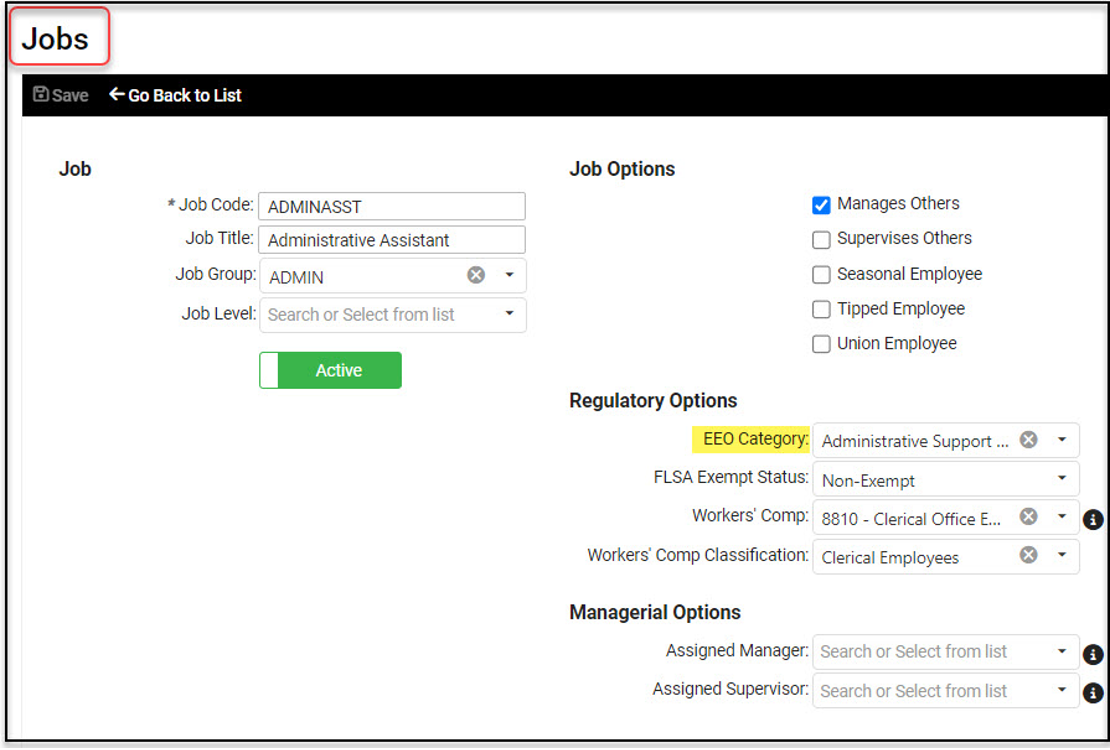
Requirement one: All Jobs must have an EEO Category assigned
Navigate to Client Management > Job > Jobs and ensure the EEO Category is populated for all your jobs in isolved. Don’t forget to check any jobs that may be inactive as well. If the job was active in the prior calendar year, it will need to have an EEO Category assigned.
Requirements two and three: All employees must have a gender and ethnic origin assigned
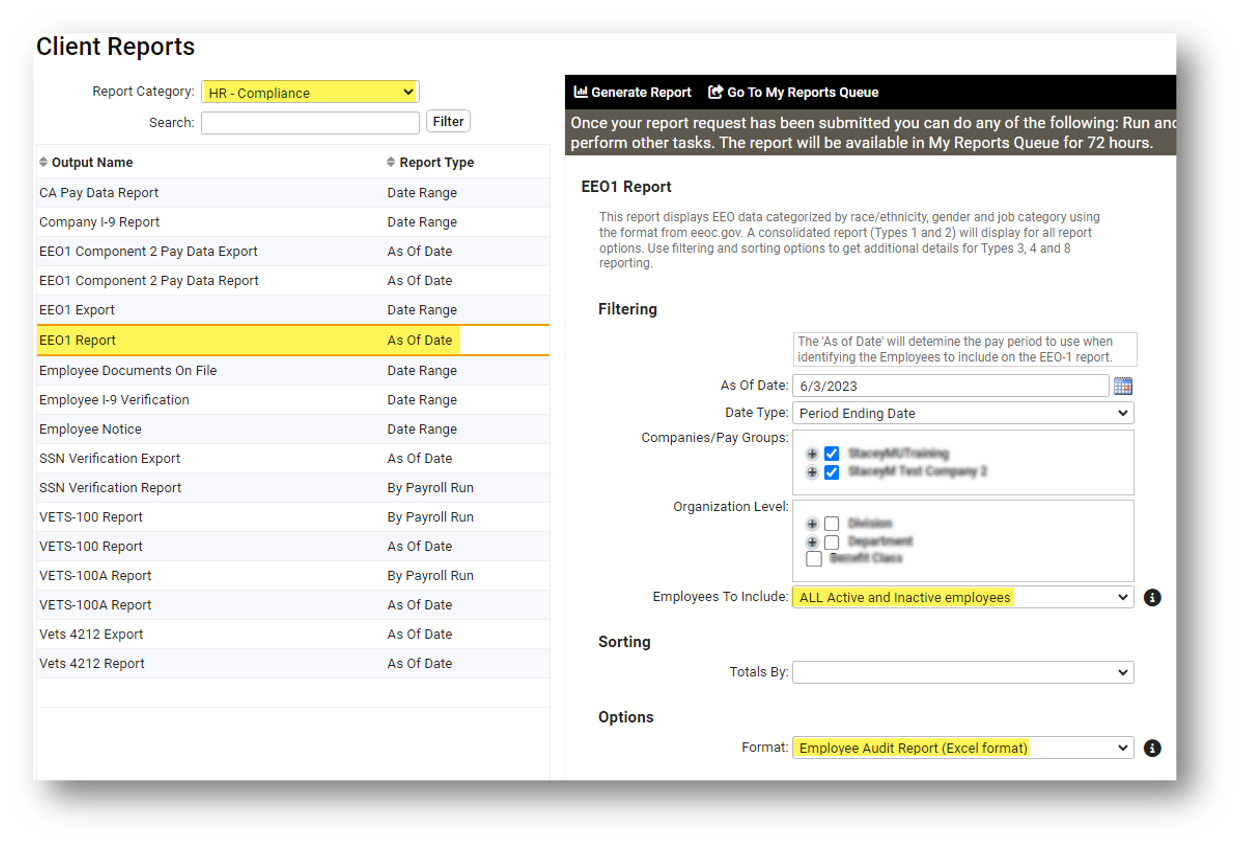
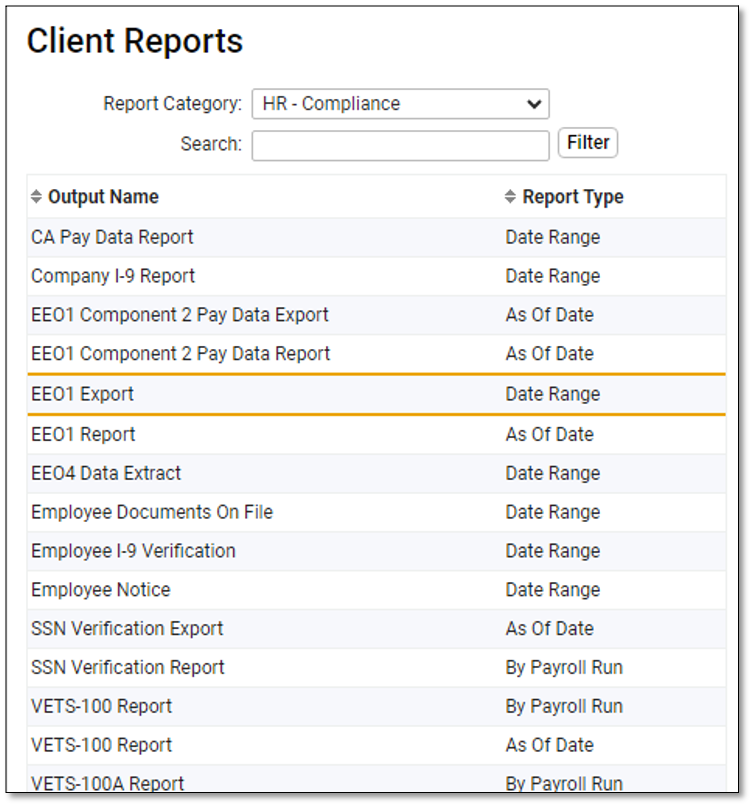
An easy way to identify where updates are needed is to run the EEO-1 report. Navigate to Reporting > Client Reports and select a Report Category of HR – Compliance to filter your report list. Select the EEO1 Report – As Of Date and enter the following report criteria:
As Of Date: Enter the period end date for the payroll you select to use for EEO reporting. This pay period must fall between Oct. 1 and Dec. 31 of the 2023 reporting year.
Date Type: Select Period Ending Date
Employees To Include: Keep the default ALL Active and Inactive employees
Select the Employee Audit Report (Excel format)
When viewing the report, page down and you will see a list of errors that need correction:
All employees must be assigned an EEO job category
All employees must have a gender and ethnic origin
Update your data
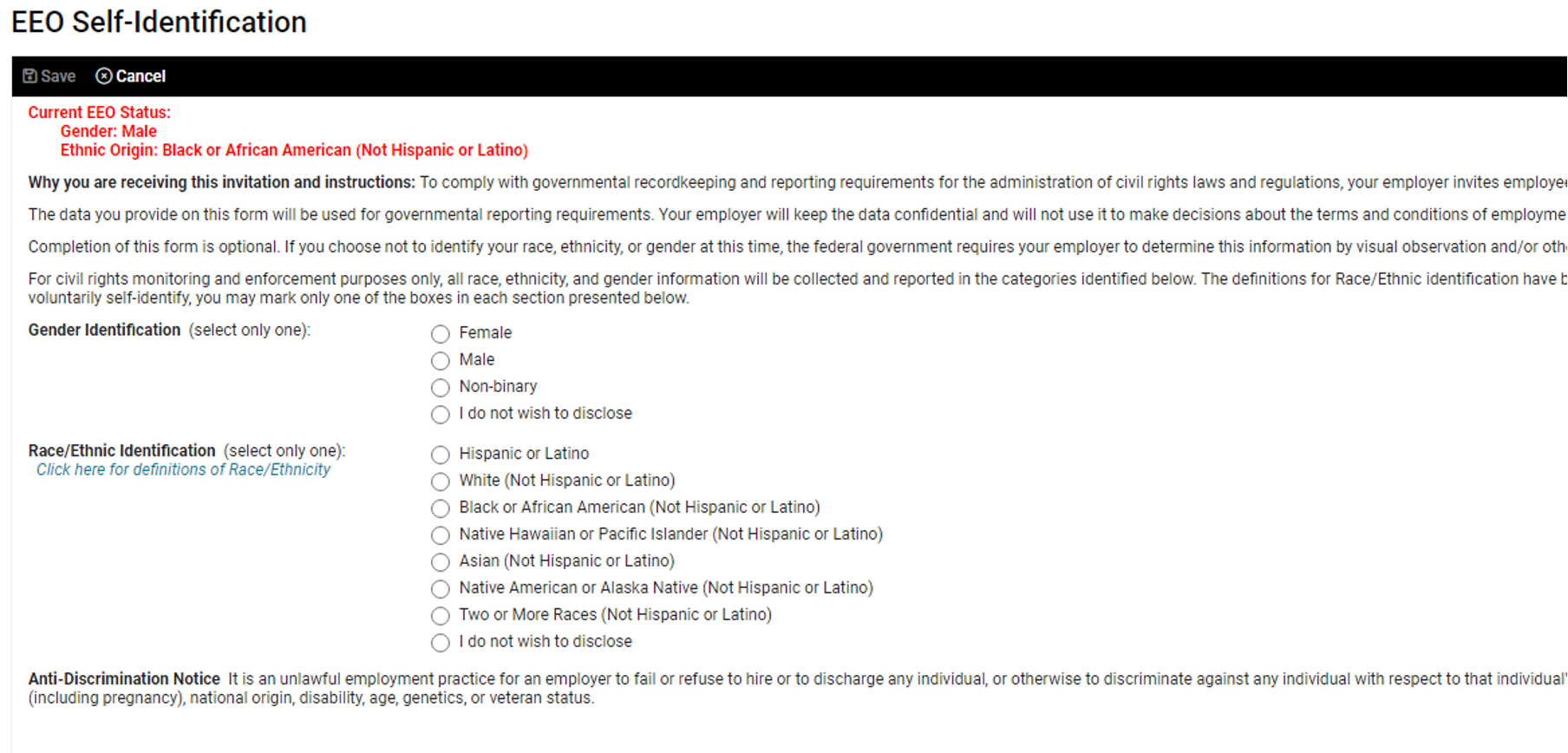
Ask your employees to add missing gender or ethnic origin data through employee self-service.
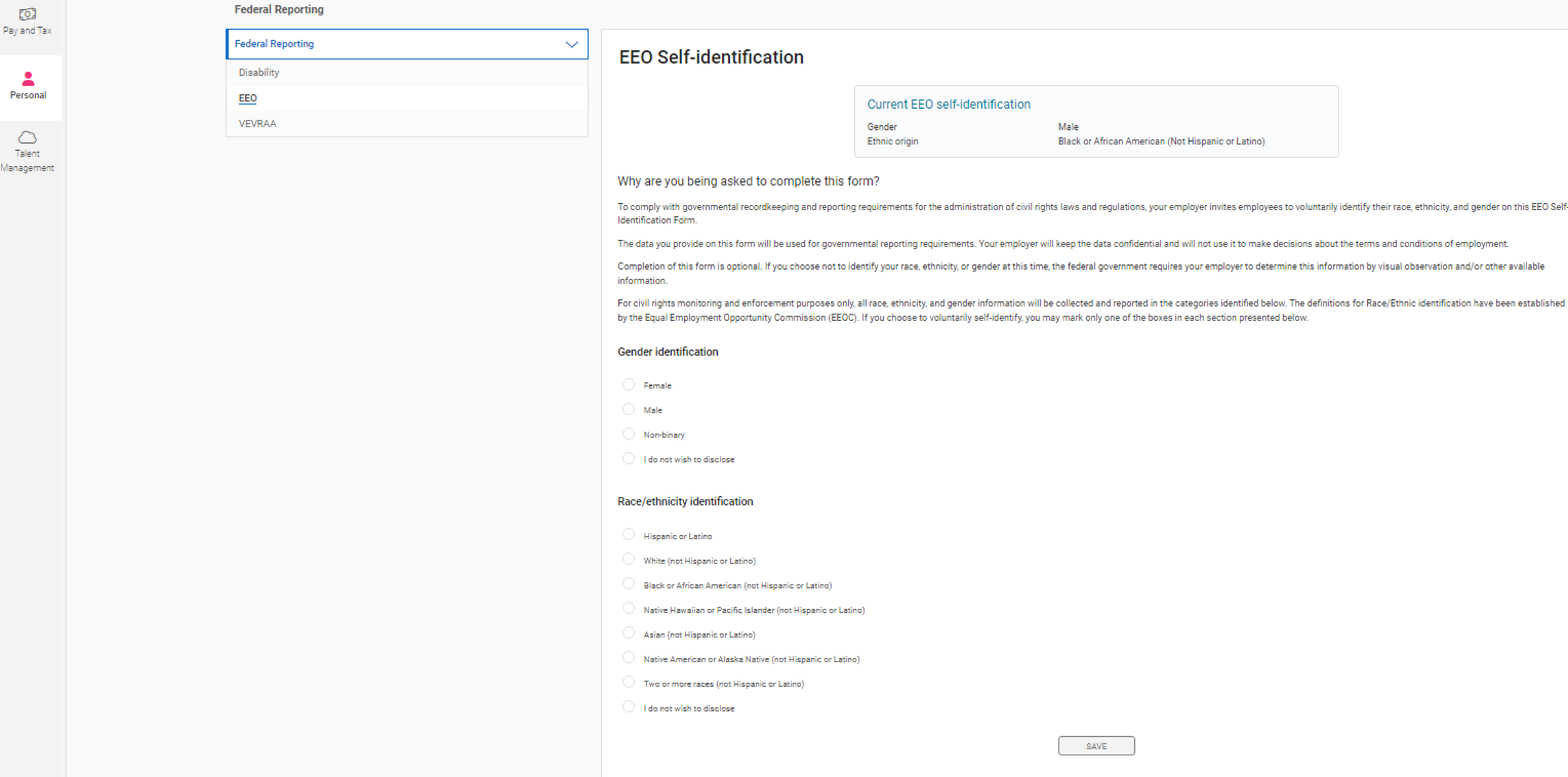
For clients using the modern Adaptive Employee Experience (AEE), employees will navigate to Personal > Personal Information > Federal Reporting > EEO to update their gender and race/ethnicity identification selections. They will be able to see their current self-reported status and make updates on any device: phones, tablets or computers.
For clients using Employee Self-Service in Classic View, employees will navigate to Employee Self-Service > Federal Reporting Data > EEO Self-Identification to update their gender and race/ethnicity identification selections.
Please note: If an employee is uncomfortable answering the questions, they can select the option “I do not wish to disclose,” but the field cannot be left blank.
If your employees do not have access to make these updates, contact your payroll specialist and they will enable the appropriate security roles.
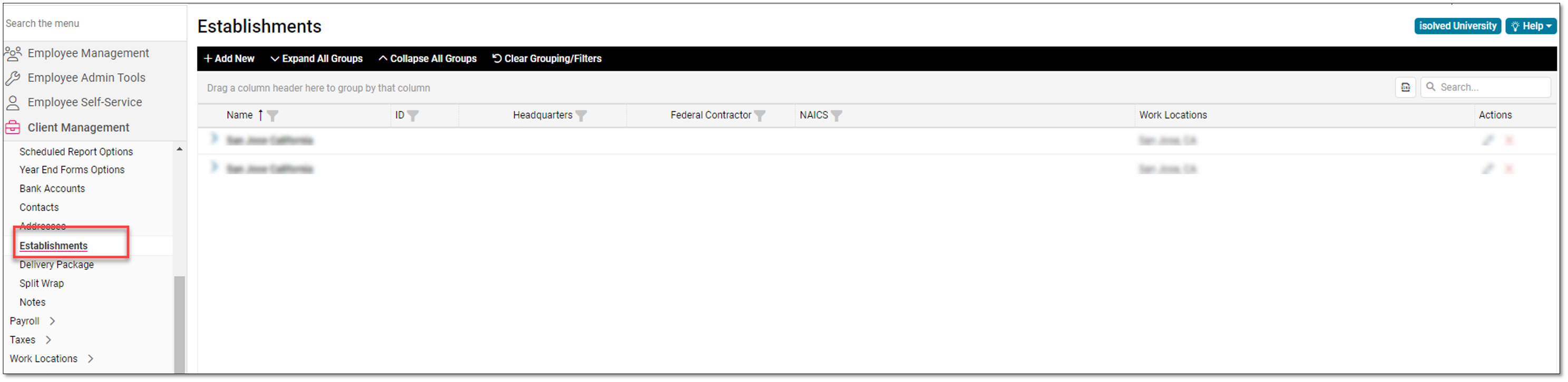
Ensure all work locations are tied to an establishment
Establishments screen links work locations to EEO-1 reporting establishments.
Navigate to Client Management > Client Maintenance > Establishments and ensure all your work locations are tied to an establishment in isolved. If you already have an establishment created, verify all your work locations are associated with the establishment. If you need to create an establishment, click the Add New button to create your establishment and then select the work locations that you want to tie to your establishment.
To use the isolved EEO1 Report or EEO1 Export, you need to link your work locations to EEO establishments and assign your company headquarters on the Establishments screen for accurate reporting.
If you are a multi-establishment employer, make sure you designate one of your establishments as your headquarters to enable the Type 3 Headquarters report.
Run your EEO-1 Audit Report
Run your EEO1 Employee Audit Report again to verify all your data has been updated. Look good? Now you are ready to run your EEO1 Export Report. Navigate to Reporting > Client Reports and select the Report Category HR – Compliance to easily access the EEO-1 reports in isolved and submit your data through the EEO-1 Data Collection Portal.
For companies tracking ethnic origin, gender and EEO classifications in isolved, the EEO1 Export is formatted as a comma-delimited (CSV) file for upload to the EEO-1 Component 1 Online Filing System. This report is available on the Reports > Client Reports menu in the HR Compliance Reports category.